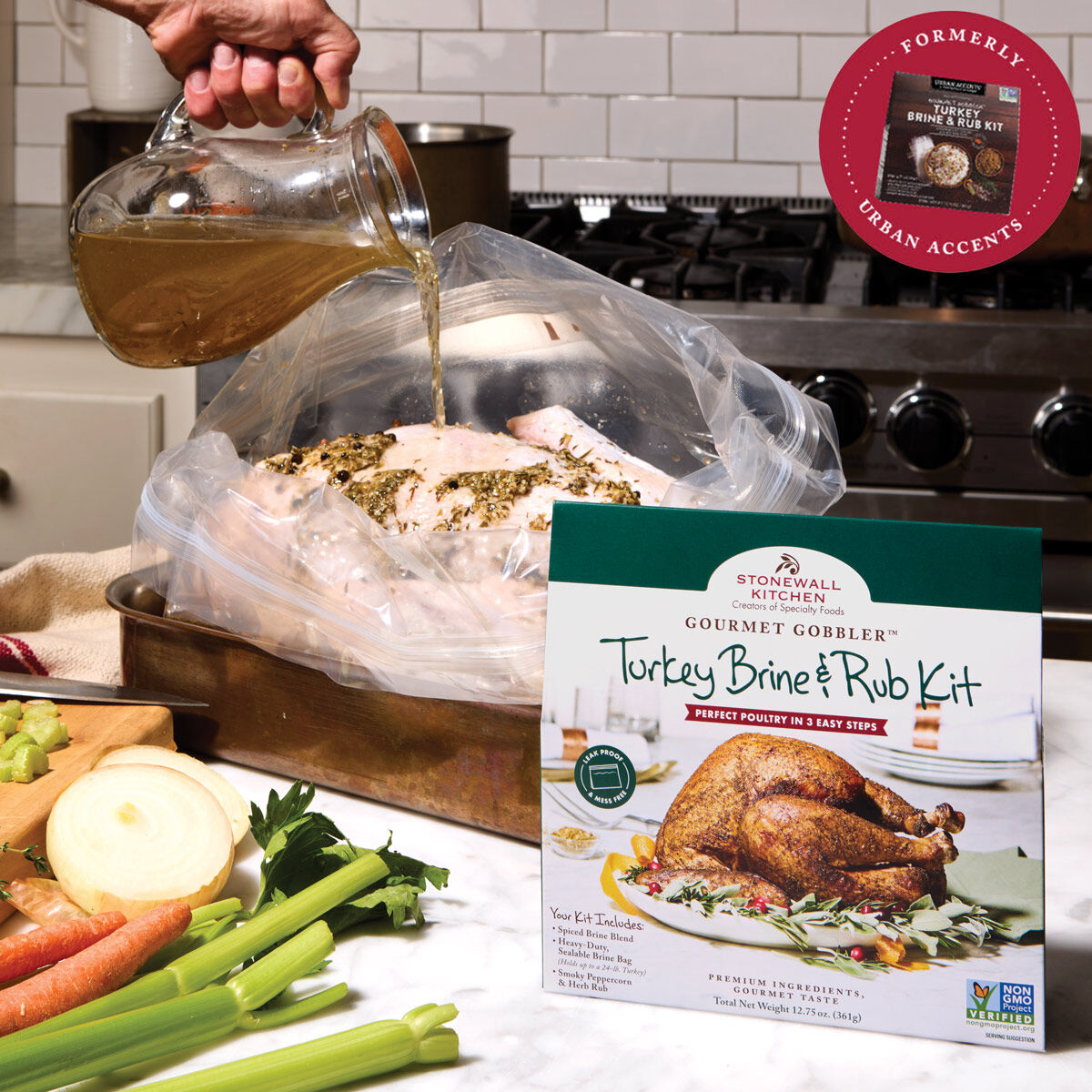

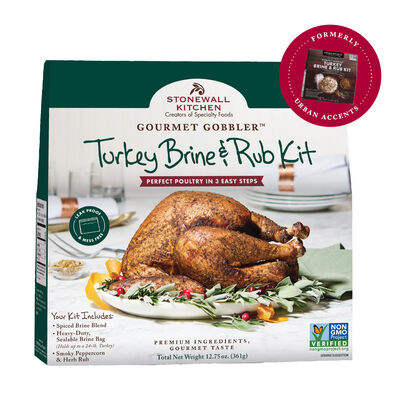
From the first course to the final flourish, our expertly crafted products make it easy to create memorable meals and gatherings for Thanksgiving and beyond. Take our all-in-one Gourmet Gobbler™ Turkey Brine & Rub Kit: it delivers mess-free poultry prep in just three simple steps!
From the first course to the final flourish, our expertly crafted products make it easy to create memorable meals and gatherings for Thanksgiving and beyond. Take our all-in-one Gourmet Gobbler™ Turkey Brine & Rub Kit: it delivers mess-free poultry prep in just three simple steps!
Brine. Rub. Roast.
Brine. Rub. Roast.

Your Thanksgiving Lineup
Your Thanksgiving Lineup



Give Thanks to the Host
Give Thanks to the Host


Feast-Day Favorites
Discover quick appetizers, cozy side dishes, decadent desserts, and more!
Feast-Day Favorites
Discover quick appetizers, cozy side dishes, decadent desserts, and more!

Perfect Brined Turkey
View Recipe

Manchego & Roasted Garlic Mashed Potatoes
View Recipe

Cranberry Brie Bites
View Recipe

Hot Pepper Cranberry Spirals
View Recipe
For proper turkey brining- Buying the right turkey is key
Q: What size turkey should I buy?
A: Rule of thumb is 1.5 pounds of turkey per person. If your family really loves turkey sandwiches or you want to try some turkey leftover recipes, then buy 2 lbs. per person.
Q: Can I brine a self-basted or injected turkey (such as Butterball)?
A: It is best to start with an all-natural turkey for maximum flavor. Self-basted or injected turkeys are injected with a flavorless brine solution.
Prepping the bird and the brine
Q: Can I cook the turkey in the brine bag?
A: NO! The brining bag is not oven safe and is recommended for brining only.
Q: Can I brine my turkey for longer than the instructions recommend?
A: Do not brine your turkey for longer than the instructions recommend. It will not make it more flavorful, just too salty. There is no rescue for over brined meat.
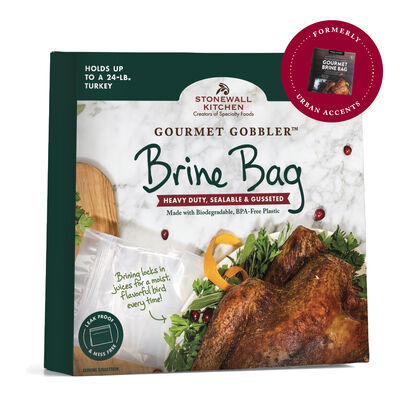
Q: How much can the Gourmet Gobbler™ brine bag hold?
A: Up to a 25-pound turkey plus 2 gallons of brine.
Q: Do I have to rinse my turkey after brining?
A: We do recommend rinsing the bird and patting dry after brining.
Q: Do I have to add sugar to my Gourmet Gobbler™ Brine?
A: No – Our brining blend is complete. You just need to add water.
Q: May I brine in other liquid besides water?
A: Fruit juice (apple, orange, and cranberry), beer, and wine can be used, but do not substitute more than 1/3 of the total water content. General rule of thumb: use 1 part substitution liquid to 2 parts water.
Q: Will turkey brining make my turkey taste salty?
A: If you have followed the Gourmet Gobbler™ brining instructions, then the salt content of the turkey will increase less than 1% after brining. Unless you over brine, the turkey should not taste salty at all. The Gourmet Gobbler Peppercorn Turkey Rub has some salt in it for a perfect, crispy skin.
Q: Can I brine a frozen turkey?
A: You must start with a fully thawed turkey.
Q: Is there a best way to position my turkey in the brine bag?
A: Yes. Place the turkey breast-side down in the brine bag for best results. This ensures that the largest concentration of meat is submerged as much as possible.
Q: Where should I store my turkey while it is brining?
A: Your turkey can be placed inside a roasting pan in your refrigerator or stored directly on ice in a cooler. Make sure the cooler/refrigerator is 35-38F.
Q: I forgot to brine my turkey until today! What happens if I dont brine for the required time?
A: As long as you are able to brine for at least 15 minutes per pound of turkey, the turkey will be juicier than if you don’t brine at all. Brining for shorter than the recommended time period might not give the brine time to get to the center of the turkey, but you'll still notice a difference in flavor!
Q: Can I brine two small turkeys at the same time in the same bag? What if the turkeys are different sizes?
A: Yes. Use the whole box of brine mix but only leave each turkey in the brine for 30 mins/pound. So if you had a 6 pound turkey and an 8 pound turkey, take the 6 pound turkey out after 3 hours and leave the 8 pound turkey in for 4 hours.
Q: Can I brine my turkey for longer than 24 hours?
A: No. Brining works much faster than a marinade so brining a turkey for longer than recommended will oversaturate the bird. An over-brined turkey will taste salty.
Q: How far in advance can I brine my turkey? Can I do it 2 days ahead of time and let it sit in the fridge?
A: Yes, you can brine your turkey ahead of time. Remove turkey from brine, rinse and pat dry, and place on rimmed baking sheet or inside roasting pan. Store turkey in refrigerator, uncovered, for up to 24 hours before cooking.
Q: Can I stuff a brined turkey?
A: We do not recommend stuffing a brined bird because the drippings from the turkey can add too much salt to the stuffing. We prefer to cook our stuffing separately. If you insist on stuffing your bird, do not add any additional salt to the stuffing. Also, make sure to check the temperature of the stuffing when you finish cooking the turkey. The stuffing temperature also needs to reach 165F before its safe to eat.
Roasting or frying the bird
Q: My turkeys skin is not crisp and browned like I prefer. What do I do?
A: Remove the turkey from the oven, let it rest for 15 minutes, then pop it back in a 500F oven to crisp the skin. Watch it carefully so you don't burn it!
Q: Can I fry a brined turkey?
A: Yes, just make sure all of the liquid is out of the cavity of the turkey and the turkey has been completely patted dry. If you’re using a rub, the rub must go under the skin.
Q: What temperature do I roast my turkey?
A: We recommend cooking a turkey at 325F until a meat thermometer inserted into the thickest part of the breast or thigh reads 165F. If the skin is not browned to your liking, increase the oven temperature to 425F the last few minutes of roasting.
Q: How do I know when my turkey is fully cooked?
A: Use an instant read thermometer and insert in the thickest part of the breast. Push the thermometer until it reaches the bone then pull it back out half way. The turkey is done when the thermometer reaches 165F. So that the turkey retains all its moisture, allow it to rest for 30 minutes before slicing.
Q: Do you baste a turkey while it is cooking?
A: A brined turkey does not need to be basted. If you must basting, we recommend no more than 1 or 2 times during the roasting process to ensure even cooking.
Q: Can I cook my turkey in a roasting bag?
A: We do not recommend cooking a brined turkey in a roasting bag.
Q: Do I have to use a roasting rack to cook my turkey?
A: The turkey needs to be somewhat elevated. If you do not have a V-rack then you can line the bottom of your roasting pan with whole carrots or roll tin foil to form a circle and place turkey on top.
Q: How do I get extra-crispy skin if I brine my turkey?
A: After brining, let your turkey dry for up to 24 hours in the fridge (optional, but produces crispy skin). Rub canola oil on the outside of the bird after refrigerating and cook however you prefer. For the last 30 minutes of cooking, turn the oven up to 375F. If your turkey is fully cooked and the skin is not browned to your liking, remove the turkey from the oven, let it rest for 15 minutes, then pop it back in a 550F oven to crisp the skin.
Q: Can I make gravy out of brined turkey drippings?
A: Yes, you can make gravy from a brined turkey, but do not add additional salt.
Quality and Allergens
Q: Is Stonewall Kitchen Gourmet Gobbler™ MSG-free, gluten-free, and non-GMO verified?
A: Yes, our Complete Turkey Brine and Rub Kit is MSG-free, gluten-free and has been non-GMO project verified.
Q: Are there any peanuts or tree nuts in the brine or in the facility where the brine was made?
A: No, there are no nuts used in the production of our brine mixes. Our blends are also not run on machines that process nuts.